Portable Data Center Guidance
Disaster recovery capacity is not only about backup hardware. You need a realistic plan for where infrastructure can run, how quickly it can be staged and what systems must keep working.
Why this matters in Polk County, Florida
You are probably evaluating disaster recovery data centers because something important cannot wait. You may be dealing with a facility constraint, delayed buildout, AI or GPU demand, disaster recovery pressure, remote operations, a migration window, a power limitation or an internal deadline that makes a traditional infrastructure path too slow.
The right next step is not to guess at equipment. You need to define what your workload requires, where the infrastructure can sit, how power and cooling will be handled, what security and monitoring expectations apply, and how fast the capacity has to be available. That is the difference between a vague interest and a project conversation that can move.
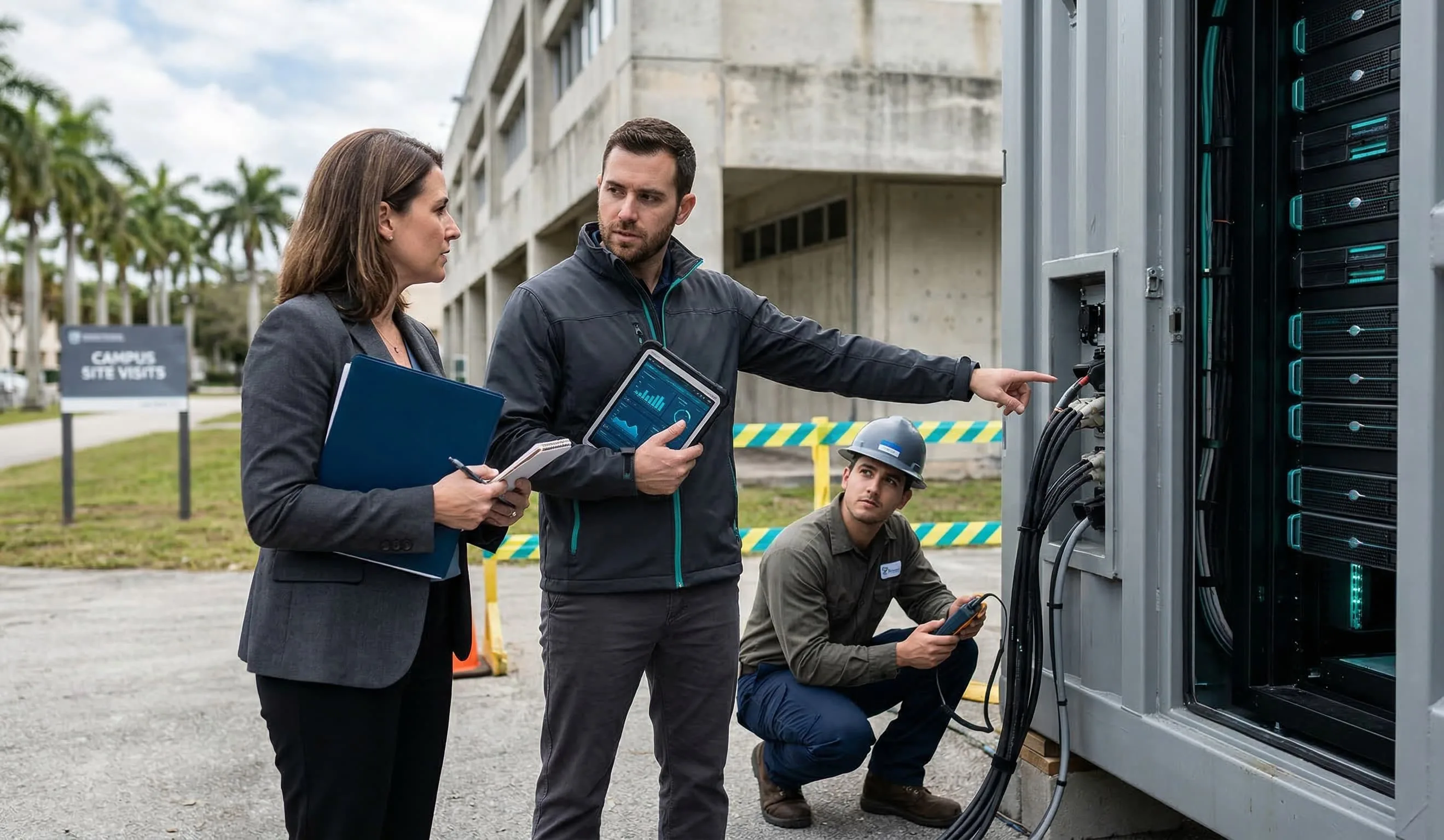
A modular or containerized option can help you evaluate capacity faster while still accounting for security, operating access, physical protection, monitoring, redundancy and serviceability.
The best option depends on available power, cooling path, network access, pad or floor readiness, weather exposure, delivery access, security zone and support logistics.
You get better answers when you can explain the workload, timeline, capacity target, deployment type and constraints before asking for pricing.
The wrong enclosure, density assumption, rental model, cooling design or procurement path can turn an urgent requirement into a slow and expensive detour.
Planning discipline
For disaster recovery data centers in Polk County, Florida, you need to connect business urgency to technical reality. That means translating the reason you need capacity into practical planning questions about rack count, density, critical systems, redundancy, monitoring, utilities, physical placement and operating ownership.
This is where many projects lose time. The conversation starts with a broad need, then stalls because the site has not been qualified, the electrical requirement is unclear, the cooling approach has not been defined, the vendor comparison is too generic or the internal approval path does not match the actual deployment timeline.
capacity, site, power and timing
before you commit capital
Before you invest time in the wrong proposal, you should know what the project has to accomplish and what conditions could slow it down. A strong first conversation gives your technical, facilities, finance and leadership teams a cleaner way to evaluate the path forward.
You may need a temporary bridge, permanent modular environment, remote site unit, disaster recovery asset, edge node or high-density compute module.
You may be better served by rental, leasing, purchase, managed support, phased procurement or a vendor comparison process.
You need enough detail around power, cooling, racks, network, monitoring, access and serviceability to avoid vague estimates.
We help you decide whether to request guidance, prepare internal facts, compare vendors or define an RFP.
request guidance
Use the form to explain what you need to protect, expand, bridge or recover. You can share the timeline, location, workload, rack count, power need, cooling concern, site condition, procurement stage or vendor question you already know. If you do not know those details yet, describe the business pressure and the deadline you are trying to manage.
Disaster recovery capacity is not only about backup hardware. You need a realistic plan for where infrastructure can run, how quickly it can be staged and what systems must keep working.